The exposure triangle is something that most beginner photographers struggle with and are by far the fundamental pillars to professional photography
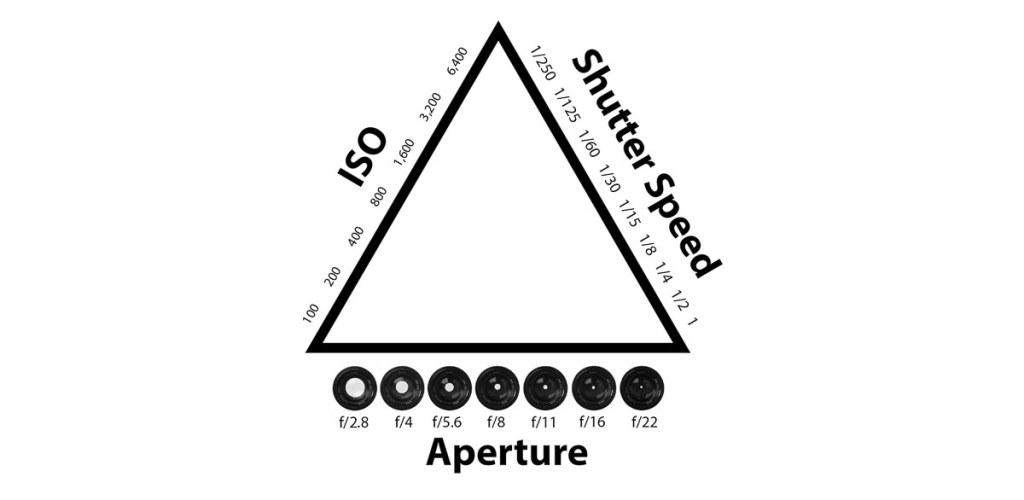
In essence the exposure triangle controls the amount of light that hits your image which is controlled by three aspects. Shutter Speed, Aperture and ISO. Get just one of these wrong and your photo could look under/over exposed, creating what we call noise in the background of your photo and not getting the quality that the photo deserves.
Measuring Light
We measure light in a term called a stop. Understanding what a stop is, is key to understanding the exposure triangle. In photography, a stop refers to the doubling or halving of the amount of light that makes up an exposure. Each photo that we take requires a certain quantity of light to expose it correctly. Adding a stop of light by doubling the exposure will brighten an underexposed image. Conversely, decreasing an exposure by one stop (halving the amount of light) will darken an overexposed image.
Shutter Speed
Shutter speed is the length of time light is allowed to hit the sensor. It is measured in seconds. Shutter speed is probably the easiest of the exposure triangle sides to understand. To double the amount of light, we need to double the length of the exposure. Setting the camera to a high shutter speed will freeze action however will let in less amounts of light as the shutter is open for a small fraction of time.
Aperture
Aperture refers to the size of the circular hole in the lens that lets in light. The bigger the hole, the more light that reaches the sensor. In fact, each time you double the area of that opening, you double the amount of light or increase the exposure by one stop. On the other hand, if you half the area of the opening, you half the amount of light hitting the sensor. And you guessed it; that will decrease the exposure by one stop. Aperture concentrates on depth of field, the bigger the aperture the wider depth of field you will have, but you’ll have less light coming in.
ISO
The final variable in the exposure triangle is ISO. You can think of ISO as the sensitivity of the digital sensor (although it is a lot more complicated than that). Higher values of ISO mean that the sensor does not need to collect as much light to make a correct exposure. Low ISO values mean that the sensor will have to gather more light to make the exposure. Having your ISO too high can create noise however if your other two sides of the triangle and done correctly this shouldn’t be too much of an issue.
 bencornwellphotography.com
Leave a comment